Bio
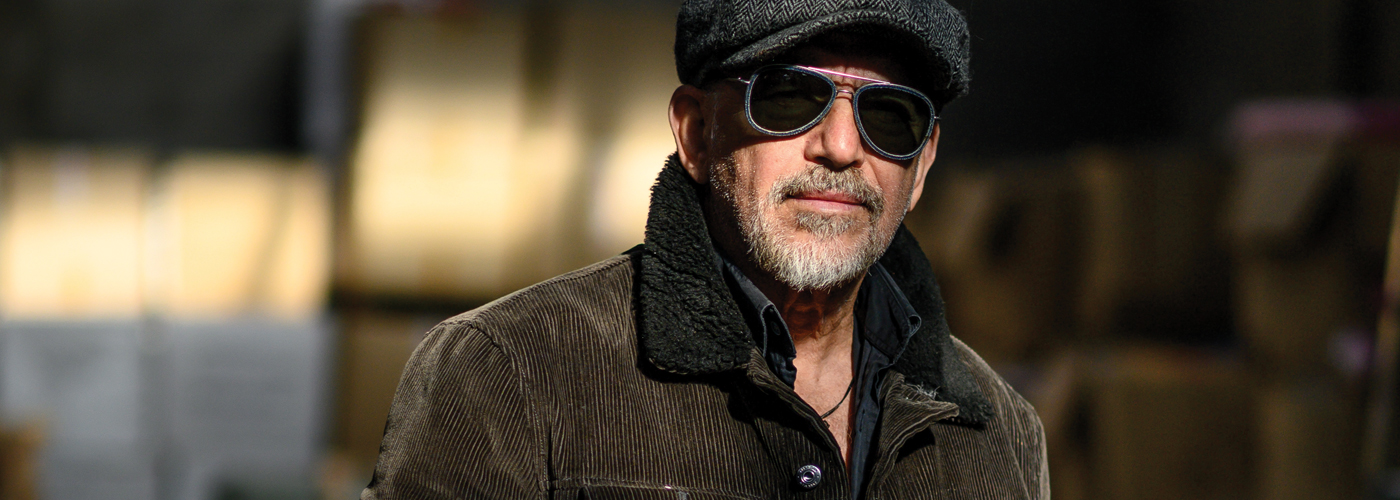
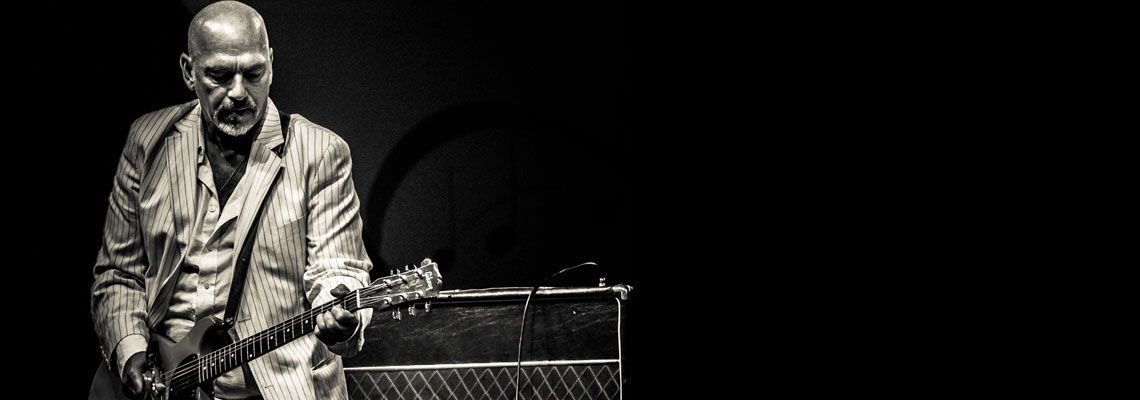
Joe Camilleri - A Life In Music

So what do I love about making music?

For me, it’s always about the freedom. If I’m making music, I’m not thinking about anything else. I can actually get lost in it.

As a young kid, listening to the jukebox was my salvation. It was the only thing that would get me into another space.

Not only did I know every song on the radio, I knew every song my mother had in her record collection. My mother would sing; it made her happy. She was a big fan of Ray Charles, she loved to sing and dance to his records. My dad hated Ray Charles with his whole heart, he thought he was a shocker. So there was a bit of family conflict there.

I was born in Malta, the third of 10 children. We moved to Australia when I was two. In Port Melbourne, in the 1950s and the start of the ’60s, I first heard rock ‘n’ roll – Hit The Road, Jack, and Frankie Laine.

My father played the tuba, and my brother played the piano accordion – two things I could have done without!

As I kid, I would steal Shadows records. I was the typical Catholic kid: On one shoulder, there was the devil, going, ‘Take it!’. On the other, was an angel, going, ‘What do you think you’re doing?!’

It wasn’t until the ’60s that you could get really good records. It was very difficult to find any blues records. I think Ross Wilson was one of the first people I knew who had Muddy Waters records and Bo Diddley and Chuck Berry.

I never thought I’d be a musician, I just loved music.

In 1964, I fell into being in a band – literally. We went to see a band called The Drollies and my friends, wanting a bit of a laugh, threw me up on stage. Suddenly, I was in the band as their lead singer.

The guitarist had a cherry-red guitar. He was a pastry cook. My buddy was the drummer. I played the bass as well as singing. It was just the three of us, but we made an incredible racket. I was working as a storeman at Australian Motor Industries. I would take the bass in and practise when no one was looking. It took me weeks to learn how to play The Last Time.

It became very apparent I was never going to be a bass player, so we got another guy on bass.

Our first gig was at Rosebud. It was incredibly exciting. I think Bobby and Laurie were on the bill. They sounded like a real band, while we were as close to Captain Beefheart as we could get.

Our second gig was a mod ball at Caulfield Town Hall. It was a big bill with, I think, the Easybeats, Normie Rowe and the King Bees. We were on first – we were always on first – but we were a lot better because there had been three weeks between gigs. The King Bees spotted me and because they didn’t have a singer, they asked me to join. The band included Peter Starkie, who was later a founding member of Skyhooks, and Dave Flett, who later joined the Captain Matchbox Whoopee Band. They played all the stuff on the radio, the Beatles and the Stones. I joined the band that night.

Dave made a big difference to me. He knew about the blues and he introduced me to jazz. But then Dave and Peter decided to go to university, so I was a bit lost.

I ended up joining the Adderley Smith Blues Band. Broderick Smith had been the singer, but he got called up for national service. Then they had a guy called Langford Lever, but they sacked him just before a big gig at Dallas Brooks Hall. Someone suggested me. The band thought I could sing in English, but not speak a word of English, which I thought was pretty funny.

I had just two rehearsals before the show, and I think I was a bit more adventurous with my clobber than the rest of the band. I was wearing a green shirt and pink trousers, while they wore their denim. During the show, Langford Lever turned up. He was very upset. The audience went wild when they saw him, and he pushed me out of the way and started singing.

I lasted about a year in the Adderley Smith Blues Band. It was fun, and it was great to connect with Kerryn Tolhurst, who later formed The Dingoes, who I loved. But my tastes were changing – I’d gotten into Miles Davis’ Bitches Brew and John Coltrane’s A Love Supreme.

I still felt like I was a part-timer. I was more of a music fan than a musician. I was spending every cent I had buying records at Batman Records. That was my life.

Then I joined Lipp And The Double Dekker Brothers, a band that also featured Peter Starkie, Dave Flett and Jane Clifton. This was the start of me getting serious.

I heard Eric Dolphy and decided I wanted to play the saxophone. It was 1971, I was 23, and I was in the city, bored. Russell Street had a lot of music shops in those days, and I walked into Clements – they had a sax in the window for $32. I bought it. I got it home and it was really dirty, so I chucked it in the bath, ruining all the pads. It was shiny, but unplayable.

I’ve still got that sax.

With Lipp And The Double Dekker Brothers, we were experimenting with the blues. Everything was elastic and free. We were listening to Robert Johnson, but trying to play it like John Coltrane. Captain Beefheart’s Trout Mask Replica became my bible. I used to love everything about it. I was writing poems. Everything was so abstract.

Unfortunately, Lipp And The Double Dekker Brothers disbanded. In August 1973, I went on the road with Dave Flett and Peter Starkie. Peter chose a stripper over the Skyhooks. He quit the Hooks to join a band called Roger Rocket And His Millionaires with Dave Flett and I. We played a strip joint in Fitzroy Street, St Kilda, where we met a stripper named Mary “Doody” Scott Pilkington and her manager, Paul Madigan.

Paul organised a tour of mining towns in WA, where we’d be Doody’s backing band. We were also her roadies and security.

We wore white boiler suits, with our names emblazoned on them. I think Doody was the first stripper who actually took everything off, so the police would turn up, to shut down the show – which was good news because it would generate publicity. But the tour fell apart when we hit Port Hedland. I’m not sure that the Walkabout Hotel knew what they were getting. I used to do a Lou Rawls-like monologue during the show. This night, I decided to do “The Walkabout Blues”. I rapped about the chicken that got up off the plate and walked away, that sort of thing. The wife of the manager was furious, and they stopped the show. I remember hiding under a car because we couldn’t get out of the car park. It was the first time I’d been run out of town.

Back in Melbourne, I joined two bands at the same time – The Pelaco Brothers and The Sharks.

The Pelaco Brothers – with Stephen Cummings, Peter Lillie and Johnny Topper – played rockabilly and country, whereas with The Sharks, we wanted to be incredibly “free”. I guess I was just trying things out. It was frustrating, in a way, because I couldn’t play very well, but the knowledge I was getting was priceless.

Jeff Burstin and Wayne Burt were in a band called Rock Granite. Jeff was also in Company Caine with John Power. They decided they wanted to do something new. They liked The Pelaco Brothers, so they asked Stephen and I to come to a rehearsal. The idea was that Stephen would be the lead singer of the new band. “This is going to be good,” I thought. But a couple of days later, Stephen said: “I think I might start my own band.” A few months later, he had started The Sports, while I became the singer in The Falcons.

So where did the name “Jo Jo Zep” come from? Well, my mum always called me “Zep”, so I was calling myself “Jo Zep”. Then I was “Jo Soap”, which I thought was really good, and it was so bad. For a while, I considered “Jo White”, but then we came up with “Jo Jo Zep”. I added “The Falcons” and it was perfect.

The first Jo Jo Zep release wasn’t credited to The Falcons. Ross Wilson had his label, Oz, and he was really keen for us to record something, so I covered Chuck Berry’s Run Rudolph Run. I performed it on Countdown’s Christmas show in 1975 – it was my first Countdown appearance.

The first Jo Jo Zep and the Falcons album, Don’t Waste It, was a heart-breaking experience. We had so much energy live, but I didn’t know how to capture that in the studio. The band kept on getting bigger live, but we couldn’t sell any records – until Screaming Targets came along in 1979. With Hit And Run and Shape I’m In, the album was a smash. Hit And Run even sounded better on record than it did live. We were ready.

Screaming Targets started getting play on American college radio and started to chart. Our guy there organised some great gigs. We would play small venues, but the shows were broadcast live on radio all over America. The biggest show of the tour was one of Bill Graham’s “Day On The Green” concerts, at the Oakland Coliseum on July 27, 1980. Journey, Black Sabbath and Cheap Trick were the headliners. We were the first band on. I don’t think the crowd was ready for our semi-reggae act. A couple of songs into our set, they started throwing stuff. As I ducked and weaved, I decided to say something. Big mistake. I said: “Is it any wonder your parents lost the Vietnam War – you can’t even shoot straight!”

Whatever they were keeping for the other bands, they threw at me. I said: “I can take you on one at a time!” I don’t know what I was thinking – I couldn’t take on anyone at any time. Bill Graham even came out to calm the crowd, telling them: “This is no way to treat this band, it’s no way to treat any band. Show them some respect.”

On one level, it was the worst experience of my life, but I just wanted to stand up for my band.

That night we did a club show and the guys from Journey turned up. They apologised for the festival crowd, which was a nice thing to do.

By the end of the Falcons, I was losing my grip. It was fun when we were playing, but not when we weren’t. There was so much administration. I think the Falcons made more than $1 million in 1979, of which I got $15,000.

I made a Jo Jo Zep album, Cha, had a hit with Taxi Mary, and then I needed a break. In those days, there were no comebacks. I thought I was done.

I was working at the fruit market in Footscray, wondering what was next. Then I started working at a café, Café Neon, pouring coffees. My friend, Chris, who owned the place, said: “Why don’t you come and play on a Sunday afternoon?” I was “Joey Vincent”, while Chris was “Johnny Coal”. We shared the same taste in music and The Black Sorrows were born.

I was really into zydeco music, so I got a bunch of desperadoes together, including Steve McTaggart on violin, George Butrumlis on piano accordion, Paul Williamson on clarinet, Wayne Burt on guitar, Wayne Duncan on bass, and Gary Young on drums. We did a couple of gigs and said, “Hey, let’s make a record.”

I’d recommend that any band do things themselves. Making a record can be as expensive or as inexpensive as you want. You can make a record on a credit card, if you want.

I remember playing birthday parties and weddings, just so I could get enough money to make a record.

We made the first Black Sorrows album, Sonola, for $1300. I just wanted to have some sort of documentation that we existed. We did the artwork and screen-printed the covers. We’d put the covers on the line, one side only, waiting for them to dry, so we could do the other side.

They’re the things you cherish – waiting for the record to be pressed and then having a lounge-room full of records and freaking out because you want to get rid of them.

The biggest thing happened when Elvis Costello was in town. He visited Gaslight Records in the city and came across a copy of Sonola. Then, instead of talking about his latest record in his radio and TV appearances, he was talking up The Black Sorrows. And he started doing our version of Young Boy Blues live. Suddenly, The Black Sorrows had become a more serious band.

Happy accidents happen. I met Nick Smith in the toilets at Armstrongs Studios. We decided to write some songs together and our breakthrough was Country Girls, which ended up on our album A Place In The World.

When we made Dear Children, the covers were too expensive to give away because they were hand-printed with four colours and thick cardboard. I went to my local newsagent and bought some pink paper, on which I wrote: “The Black Sorrows, Dear Children”. I wrapped this around plain white covers like a bandage and sent them off to radio stations.

Hearing your record on the radio is phenomenal. It’s about the most exciting thing you could have happen to you. It’s just so exciting that they decide to play that particular record.

I mortgaged the house to make Dear Children and then CBS (Sony) stepped in and said: “We like this record, we’ll buy it off you.”

The album reached the Top 20, and we made Hold On To Me. Sony thought I’d do Dear Children again. Then when we made Harley & Rose, they couldn’t see it becoming popular. They wanted Hold On To Me again – even though they didn’t get it the first time around! There’s always a struggle between trying to move forward and trying to take people with you.

It’s always tricky making records, especially if you become popular. If you’re not popular, you’re invisible and you can just do it.

I didn’t want to put Chained To The Wheel on the Hold On To Me album. It wasn’t until we recruited The Bull Sisters and realised I could make it a male-female thing that I knew it could work.

That song and that album turned it all around. All of a sudden, it was “today we’re in Norway, tomorrow Paris, next day back in Scandinavia”. It was outrageous for a band that had been playing in cafes. The first couple of trips overseas were magnificent times. We all needed each other, it was like starting all over again. I remember we flew into Switzerland for a gig and we’d sold only 10 tickets. We flew out without doing the gig. Then, three months later, we did a festival in Switzerland and it was a great day. Then we returned to play that same venue and we sold out days before the gig.

At home, Chained To The Wheel hit the Top 10 and took the album from gold to platinum in two weeks. It ended up triple platinum and stayed on the charts for nearly two years.

I haven’t always enjoyed the Sorrows. There were times when we were doing 300 gigs a year. It was pretty hard – “Where am I? Pinch me.” The best times are always when you’re pushing whatever it is you have. I was pushing a band that nobody wanted to know about.

After Harley & Rose we started moving in a different direction as a band. It was still going well, but I became disenchanted. We had nine people on stage, and it wasn’t about the song any more, it was about the spectacle. And I was writing songs and performing those songs as a spectacle. Now, there’s value in that, but it wasn’t what I signed up for.

I’m not a perfect fit with the music industry. I call it art, they call it product. And I’m not really into the scene. I don’t know what it would be like to be in the scene. What would I say to the other bands in the scene – “I like your shoes, I like your outfit?”

I haven’t counted them, but I know there have been more than 40 people in The Black Sorrows. I like playing with other people. I’m not an island.

The essence of playing with really great people is trying to extract the feeling, not their technical brilliance. You’re trying to find that magical moment that the song deserves.

On a good night, we’re a great band. On an average night, we’re an average band. And on a bad night, we’re a train wreck. And I reckon that’s the way bands should be. Sometimes you fall flat on your face, but I’d rather fall flat on my face than be the same every night.

If you have different people in the band, it always gives you something. Change. That’s where I believe you have to be.

I remember playing with Sade in Perth and Melbourne, filling in for her sax player who was injured. They wanted to be exactly like the record, whereas I have no interest in being like the record. I want to take it somewhere else, even if it’s just for a few seconds.

I call it “The Struggle”, trying to find something else, a new angle on the same thing. I don’t want to be comfortable.

Music is always evolving. You can’t resist change. I think we’re changing all the time, there’s no stopping it. You have to keep going forward because your body’s changing, your mind’s changing, situations around you are changing. You either resist change or you go with it. I kind of like the idea: “Well, I’m going with it.”

To me, music is about people having fun. It’s not an intellectual thing. I remember reading something that John Lennon said. Some guy asked him what his favourite Beatles songs were. He started saying Love Me Do and things like that. The guy couldn’t understand it. But he was dealing with the simplicity of the music. I always thought that was a great thing to say.

Writing is important to me. I didn’t write one song on the first Sorrows’ album. You can do a record where you don’t write any of the songs, but you can only do one. Usually, if you haven’t got anything to say, you can’t exist. I want to write good things and be smart enough to know the difference between a good one and a bad one.

So what have I learned?

I don’t believe that things necessarily fall your way, but sometimes things just happen. You never corner the market. Never take anything for granted. You’re only as good as your last record, and people will come and see you if they hear your song on the radio.

And I’ve learned that I love it.

Some people like playing golf, I like playing music with people.

I’m not a great singer, and I’m not really a great musician. And I ain’t got no show!

But my biggest asset is my will.

And I hope I die on the tour bus.


Jo Jo Zep & the Falcons

It's nearly 30 years since Camilleri originally joined the Falcons of Wayne Burt and Jeff Burstin (both ex-Rock Granite) on guitars, John Power (from the Foreday Riders and Company Caine) on bass and former Daddy Cool drummer Gary Young - to record a version of 'Run Rudolph Run' as a Christmas single produced by Ross Wilson.

Even by that stage Camilleri was a local veteran, having played with mid-60's R&B band the King Bees, then the Adderly Smith Blues Band (which allegedly sacked him for sounding too much like Mick Jagger), Lipp and the Double Dekker Brothers, The Sharks and The Pelaco Brothers (with Stephen Cummings).

After recording the albums 'Don't Waste It' and 'Whip It Out', the mini-albums 'Loud and Clear' and 'So Young' (the title of which was covered by Elvis Costello) for Oz Records, the band - and its shifting cast of players - found themselves at Mushroom Records. By this stage Wayne Burt, one of the nations' great songwriters even then, had left - to be replaced by Tony Faehse (who had played in Alvin Stardust's band) - and the composing duties were thrown over to Camilleri and his colleagues. Soon afterwards, the ebullient Wilbur Wilde, who had been an integral member of Ol' 55, also joined the band.

The label move also teamed Camilleri up with producer Peter Solley who oversaw the hit singles 'Hit & Run', 'Shape I'm In' and 'All I Wanna Do' and the albums 'Screaming Targets' (1979), 'Hats Off Step Lively' (1981) and the 'Dexterity' mini-album (1981). The band toured overseas and even got to play at the Montreux Jazz and Blues festival.

But by this stage the sound of the band was changing and by 1982's sophisticated 'Cha' album and its hit single 'Taxi Mary' it was just Jo Jo Zep, minus the Falcons and plus Jane Clifton, Joe Creighton and others. Even a tour of America (which by all accounts was a disaster) failed to stop the eventual demise of the group. Ironically, Camilleri soon got back to his roots and went on to form the even more successful Black Sorrows. A brief national tour to support the 1984 compilation saw the Camilleri/Wilde/Burstin/Faehse/Power/Young line-up appear for the last time until that famed reunion in 2001 and the brand new album!


The Black Sorrows

Original line-up: Joe Camilleri (aka Joey Vincent, vocals, sax; ex-Pelaco Brothers, Jo Jo Zep and the Falcons), Paul Williamson (clarinet, sax), George Butrumlis (piano accordion), Wayne Burt (guitar, vocals; ex-Jo Jo Zep and the Falcons), Jeff Burstin (guitar; ex-Company Caine, Jo Jo Zep and the Falcons), Steve McTaggart (violin), Wayne Duncan (bass; ex-Daddy Cool, Living Legends), Gary Young (drums; ex-Daddy Cool, Jo Jo Zep and the Falcons)

Any examination of The Black Sorrows inevitable comes down to one person. Joe Camilleri (singer, songwriter, saxophonist, producer and the brains behind The Black Sorrows) is one of the most genuinely talented figures in Australian music. Maltese-born (in 1948), Camilleri got his start on the Melbourne soul and R&B circuit during the 1960s with bands like The King Bees and Adderley Smith Blues Band.

His appearances with Lipp and the Double Dekker Brothers, Sharks and The Pelaco Brothers in the early 1970s may have been legendary, but it was not until the formation of Jo Jo Zep and the Falcons in 1975 that Camilleri achieved national prominence. The Falcons earned a reputation as a red-hot live band and recorded a series of highly acclaimed albums and singles. Jo Jo Zep broke up in 1983 and Camilleri launched The Black Sorrows a year later. From humble beginnings playing zydeco, R&B and soul-inspired semi-acoustioc music around Melbourne's inner-city cafes, Camilleri transformed the band into one of the most sophisticated ensembles in the country.

For the first couple of years, Camilleri steered a shifting line-up of musicians (which included three ex-Falcons) through several relaxed and pleasant albums like Sonola, Rockin' Zydeco and A Place In The World. These early records concentrated on material such as Van Morrison's 'Brown Eyed Girl', John Lee Hooker's 'Don't Look Back' and Ray Peterson's 'Corinna, Corinna', plus an increasing number of Sorrows' originals. The band's early singles included: "What a Difference a Day Makes'/'Brown Eyed Girl' (June 1984, from Sonola), 'Shape I'm In'/'My Negress in Black' (March 1985, from Rockin Zydeco), 'Sons of the Sea'/'Gypsy Heart' (November 1985) and 'Country Girls'/'A Place In The World' (March 1986, both from A Place In The World), 'Daughters of Glory'/'Foolish Girl' (April 1987), 'Maybe Tomorrow'/'Dear Children' (June) and 'The Last Frontier'/'Wild Street Girls' (November, all from Dear Children).

Nick Smith (vocal harmonies, lyrics; ex-Millionaires, Kevin) and Peter Luscombe (drums) joined The Black Sorrows prior to recording A Place In The World, although the band still essentially featured a floating line-up. Guest musicians on that album included Joe Creighton (bass; ex-Billy T), Ross Hannaford (guitar; ex-Daddy Cool, Billy T), Andrew Pendlebury (guitar; ex-Sports), Ed Bates (guitar; ex-Sports) and The Blackberries (vocal harmonies), Johnny Charles (bass) and Mick 'The Reverend' O'Conner (Hammond organ) joined for Dear Children. Mick Girasole then replaced Charles on bass.

Dear Children represented a turning point in the band's career. Originally issued independently and sold only at the band's gigs, it reached the national Top 20 (#18 in June 1987) once CBS stepped in with a distribution deal. With the arrival of backing vocalists Vika and Linda Bull, and the establishment of a permanent line-up, The Black Sorrows issued the finely crafted albums Hold On To Me, Harley And Rose and Better Times. As well as Camilleri and the Bull sisters, the line-up around Hold On To Me (September 1988) featured Jeff Burstin, Wayne Burt, Mick Girasole and Peter Luscombe (Smith had left the touring band, but still contributed lyrics).

Hold On To Me peaked at #6 on the national chart in May 1989. It stayed on the chart for a year and sold 250 000 copies, as well as a respectable 150 000 units when issued in Europe and the USA. It produced five singles: 'Hold On To Me'/'Safe In The Arms Of Love' (August 1988), 'The Chosen Ones'/'Mercenary Heart' (October), 'Chained To The Wheel'/'Waiting For The Rain' (February 1989), 'The Crack Up'/'The Story Never Changes' (April) and 'Fire Down Below'/'Daughters Of Glory' ('89 remix)/'Come On In My Kitchen' (August). 'Hold On To Me' reached #24 on the national chart in October 1988, 'Chained To The Wheel' reached #9 in May 1989 and 'The Crack Up' reached #40 in June. The Black Sorrows also won Best Group at the 1989 Australian Record Industry Association (ARIA) Awards.

Richard Sega replaced Girasole on bass, and Jen Anderson (violin; ex-Kings Of The World) joined for the classic Harley And Rose (November 1990). The album yielded the excellent singles 'Harley And Rose'/'The Calling' (#24 in September 1990), 'Never Let Me Go'/'Never Let Me Go' (Swamp Mix) (#30 in April 1991) and 'Hold It Up To The Mirror' (June).

With heavy overseas touring (seven tours in 18 months) taking its toll on the band's resolve and stability, Burt and Girasole left The Black Sorrows in late 1991. Michael Barker (percussion) and Stephen Hadley (bass; ex-Kate Ceberano and The Ministry of Fun) came in as replacements. During May 1992 The Black Sorrows joined Beatfish, Deborah Conway, The Poor Boys, Kate Ceberano, Club Hoy and The Angels for the Wizards of Oz series of showcase gigs in Los Angeles. The band's next album, Better Times (October 1992), produced the singles 'Better Times' (May), 'Ain't Love The Strangest Thing?' (#46 in September) and 'Come On, Come On' (February 1993). Lyricist Laurie Polec had taken over from Nick Smith for Better Times. Like Hold On To Me before them, Harley And Rose and Better Times (Top 10 in April 1993) both sold over 200 000 copies.

In between his commitments to The Black Sorrows, Camilleri found time to issue the album Amazing Stories (December 1991) with his occasional country/R&B outfit The Revelators. The Revelators comprised Camilleri, Burstin, Luscombe, Joe Black (keyboards, guitar; ex-Mondo Rock), with help from the Bull sisters, Anderson, Barker, Garrett Costigan (pedal steel) and Venetta Fields (vocals). Amazing Stories produced two singles, 'What Does It Take (To Win You Love)?' (November 1991) and Bob Dylan's 'Caribbean Wind' (April 1992). Also included on the album was an elegant reworking of the Gram Parsons/Chris Etheridge tender-sad love song 'Hot Burrito #1'. For a short time, Amazing Stories and The Black Sorrows' Better Times were available as a Limited Edition two-for-one CD collector's pack.

In 1993, The Black Sorrows issued the CD EPs 'Sweet Inspiration' (July) and 'Stir It Up' (#58 in November). At the end of 1993, Camilleri dismantled the Bull sisters/ Burstin/ Luscombe/ Anderson/Barker/Hadley version of The Black Sorrows, and reconstituted the band as a solo act with supporting musicians. After a chance meeting with Kerryn Tolhurst (ex-Country Radio, Dingoes), Camilleri travelled to New York to record the Lucky Charm album, with Tolhurst co-producing.

Lucky Charm was a more reflective, rootsier collection than previous band efforts. It produced the CD EP 'Snakeskin Shoes' (#16 in AUgust 1994) and the singles 'Last One Standing For Ya' and 'Lucky Charm'. Ex-Noiseworks' frontman Jon Stevens sang a duet with Camilleri on 'Last One Standing For Ya', which reached #46 nationally in December.

In December 1995, Camilleri issued a solo CD EP, 'All Saints Hotel'. It was the only release since the 1986 cover of Kool and the Gang's 'Celebration'/'Wha'cha Gonna Do About It?' and 1989's 'Angel Dove' single to come out under his own name rather than The Black Sorrows' moniker. The CD EP contained a zydeco reworking of Chuck Berry's 'Run Rudolph Run', a song which Camilleri had previously recorded for the first Jo Jo Zep single in late 1975.

In 1996, The Black Sorrows released the triple live album Radio Waves which presented the ultimate Black Sorrows gig (36 tracks!). Also available was The Black Sorrows box set, containing the albums Sonola, Rockin' Sydeco, Dear Children and A Place in the World, plus Not for Production an exclusive 11-track compilation of rarites and never-before-released tracks. The box set brought The Black Sorrows full circle. In early 1997, Camilleri established a new, eight-piece line-up of The Black Sorrows that was inspired by a late 1960s New York-style of jazz/funk/blues as pioneered by Ramsey Lewis and Les McCann. The first release from the new Black Sorrows was the CD EP 'New Craze' (August 1997)


The Revelators


Bakelite Radio


Joe Camilleri Sites


Random Photo

Management


Bands


Record Labels


Who is online?

We have 9 guests online
Valid XHTML and CSS.